Building a Home on Rural Land in North Georgia: Perc, Septic, Well, Slope
You found the land. Maybe it is eight acres off a county road outside Chickamauga, or a wooded hillside near Rock Spring with a view you cannot stop thinking about. The price looks fair, the seller seems honest, and you are already sketching where the porch would go. Then somebody at church or on a forum says the four words that stop every rural build cold: no perc, no house.
That worry is real, and it is only the first one. Building a house on land in North Georgia is a different project than building in a subdivision where water, sewer, and a paved street are already waiting at the curb. On rural land, you are responsible for the ground, the water coming in, the water going out, the road getting to the house, and the power getting to the panel. None of that is impossible. Most of it is routine for a builder who works here. But every one of those items has a cost and a timeline, and the lots that go wrong are almost always the ones where nobody checked before the closing. This post walks through what to check, in the order it matters, and how each piece changes the house you can build and the budget you need to build it.
Before You Close: The One Test That Decides Everything
If a rural lot cannot support a septic system, it cannot support a house, no matter how pretty it is. That is why the soil evaluation, which most people still call a perc test, is the first thing to settle, ideally before you sign a contract or at minimum as a contingency written into it.
In Georgia, a septic system is permitted through the county environmental health office. Before that office will issue a permit, the site has to pass a soil evaluation. Either the health department or a licensed soil classifier looks at the soil profile, checks how deep it goes before hitting rock or a restrictive layer, and judges how well it drains. Heavy red clay, which is what most of Walker and Catoosa County sits on, drains slowly. Shallow rock, common on the ridges around LaFayette and Rising Fawn, can leave too little usable soil above it. Either problem can shrink the area you have for a drain field or push you toward a more expensive system design.
Here is the practical advice: make the purchase contingent on a passing soil evaluation and a septic permit, and have the evaluation done where you actually intend to put the house and drain field, not just somewhere on the parcel. A lot can "perc" on one corner and fail where you want to live. We have walked lots with buyers where moving the house pad two hundred feet made the difference between a standard system and a far more costly one.
Septic vs. Sewer in Walker and Catoosa County
If your lot is inside LaFayette, Fort Oglethorpe, Ringgold, or Rossville city limits, there is a fair chance public sewer runs nearby and you will tap into it. Outside those areas, and across most of rural Walker and Catoosa County, assume septic until you confirm otherwise.
For septic, the process generally looks like this:
- Request a site evaluation through the county environmental health office, which is part of the public health department.
- Have the soil evaluated at the proposed house and drain field location.
- Receive a septic permit that specifies the system type and size, usually tied to the number of bedrooms in the house plan.
- Have a licensed installer put the system in, with a final inspection before it is covered.
One detail catches people: a septic permit in Georgia is generally valid for about a year. If you get the permit, then spend a year and a half finalizing plans and financing, you may be reapplying. The fix is simple. Get the soil evaluation early so you know the land is buildable, then time the actual permit so it lines up with when you expect to break ground. A builder who is coordinating the whole project can help you sequence that.
The bedroom count matters too. The permit sizes the system to the house, so if you tell the health department three bedrooms and later decide on five, that is a new conversation. Settle the floor plan before the permit, not after.
Well or Public Water: What Rural Lots Here Usually Face
Public water reaches farther into the county than sewer does. Many rural lots along main county roads can tap a water line at the road, and that is usually the simpler and cheaper option when it exists. But the farther you get from town, and the more you are up a gravel road or back off the pavement, the more likely you are drilling a well.
Lots around LaFayette, Chickamauga, Rock Spring, and Rising Fawn often end up needing both well and septic, and that combination is where budgets drift. A well's cost depends mostly on depth, and depth depends on where the water is under your specific lot, which nobody knows for certain until the rig is drilling. A driller who works this area can give you a realistic range based on nearby wells. Add the pump, the pressure tank, the trench to the house, and a water test, and you have a line item that deserves its own place in the budget, not a guess.
When public water is available but the tap is a long run from the road to the house site, compare the two honestly. A long water line in rocky ground is not free either. This is one of those trade-offs where a builder who has done both on lots nearby can save you from assuming the "obvious" answer is the cheap one.
Slope, Clay, and Rock: How Terrain Changes Your Foundation
Flat land is scarce in Northwest Georgia, and the lots with the best views are the ones that slope. That is not a reason to avoid them. It is a reason to design the house for the land instead of forcing a flat-lot plan onto a hillside.
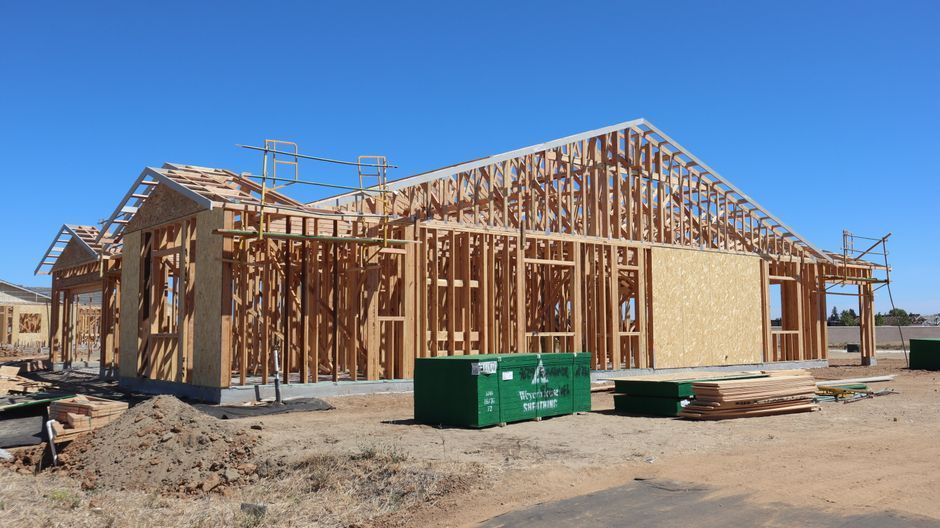
A walkout basement is the natural fit for a sloped lot here. The uphill side is buried and stays cool, the downhill side opens to daylight, and you gain finished square footage without widening the footprint. The grading work that a sloped lot requires anyway becomes part of the foundation instead of a separate cost to flatten everything. On a lot that falls gently, a crawlspace with stepped footings can work as well. On a lot that falls hard, a slab usually means moving a lot of dirt or retaining walls, and that money is often better spent on a basement.
Clay and rock change the picture in their own ways. Red clay holds water and expands when wet, so drainage around the foundation is not optional. Footing drains, proper backfill, and grading that carries water away from the house are what keep a basement dry through our spring rains. If you want to understand what happens when that is skipped, read our post on basement and crawlspace water problems during Georgia spring rains. Rock near the surface can mean blasting or hammering to set footings or a basement, and that is the single biggest surprise cost in excavation. A test pit or a conversation with a local excavator before you buy is cheap insurance.
If you own a sloped lot and are not sure what it can hold, call Bales Home Solutions at (423) 991-9252. We will walk it with you and talk through what the land is telling us before you spend a dollar on plans.
Driveway, Culvert, and Power: The Three Costs People Forget
Buyers budget for the house, the well, and the septic. They often forget everything between the road and the front door.
- Driveway and culvert. Where your driveway meets a county road, you will likely need a driveway permit, and if there is a ditch, a culvert pipe sized and set to the county's standard. A long gravel driveway up a grade needs a proper base, crowned so water runs off, or it will wash out the first wet winter. Figure the full length, not the first fifty feet.
- Power. The utility runs service from the road to the house, and the first stretch may be included, but a long run back to a secluded site can mean poles or underground trenching that you pay for. A house set a quarter mile off the road is private, and it also costs more to connect.
- Clearing and grading. Trees, stumps, topsoil, and the pad itself. Wooded lots cost more to open than pasture, and rock under the pad adds time and machinery.
Treat these as real line items with real numbers from the people who will do the work. A site that looks like a bargain can close the gap with a lot that already has the driveway, meter, and water tap in place.
Why Fall Is the Best Season for Site Prep Here
If you have flexibility in your timeline, aim to clear and grade in the fall. The ground across Walker and Catoosa County is driest from late summer into fall, before the winter and spring rains set in. Dry clay moves cleanly. Wet clay sticks to everything, ruts under equipment, and refuses to compact properly, which is a problem when that same clay is going to sit under your foundation.
Fall grading also gives the pad time to settle before footings go in, and it lines you up to pour and frame through the drier parts of winter. Build the sequence backward from that: soil evaluation and permits in late spring or summer, clearing and grading in early fall, foundation before the ground gets soggy. Our overview of the custom home building process from start to finish shows how site work fits into the rest of the schedule.
A Pre-Build Checklist You Can Take to the County
Before you close on a rural lot, or before you commit to building on one you already own, work through this list. Bring it to the county offices, bring it to your builder, and do not skip the items that feel like a hassle.
- Soil evaluation completed at the proposed house and drain field location, with the written result in hand.
- Septic permit obtained or confirmed obtainable, sized for your actual bedroom count, with the expiration clock in mind.
- Water source settled: public tap confirmed with the water authority, or a well estimate from a local driller.
- Driveway and culvert permit requirements confirmed with the county road department.
- Power service plan and line extension cost from the electric utility.
- Survey with property lines, easements, setbacks, and any floodplain marked.
- Rough clearing and grading estimate from an excavator who has worked lots nearby.
- A foundation type chosen to match the slope, not forced onto it.
- A builder who has walked the lot and tied every one of these items into the total budget.
That last line is the one that pulls the rest together. Excavators prep dirt. The health department permits septic. The driller drills. Someone has to look at all of it as one project, and that is the job of a builder who is based in LaFayette, not serving it from an hour away. Bales Home Solutions is a few minutes from most of these lots, and we would rather spend an hour on your land before you buy than watch you find out about rock under the pad after closing. Request a site visit here or call (423) 991-9252.
Frequently Asked Questions
Do I need a perc test before building in Walker County?
If you will be on septic, yes. The county environmental health office requires a soil evaluation before it issues a septic permit, and the septic permit is one of the things the county looks for before a house can go up. Get it done before you close on the land, or make the purchase contingent on it passing.
How long is a septic permit good for in Georgia?
A septic permit is generally valid for about a year from the date it is issued. If you do not install the system within that window, expect to renew or reapply, which may involve another evaluation. Time the permit to line up with your actual construction start, and confirm the current window with the county when you apply.
Can you build on a steep lot in North Georgia?
Yes, and many of the best lots here are sloped. The key is choosing a foundation that works with the grade, usually a walkout basement, and handling drainage so clay and runoff do not end up against the house. Steeper lots cost more in grading and may need retaining walls, so get a site-specific estimate rather than assuming a flat-lot budget.
How much does a well cost compared to tapping public water?
A public water tap is usually the cheaper and faster option when a line runs near your lot, since you pay a tap fee and the trench to the house. A well costs more up front because of drilling, the pump, and the pressure system, and the final number depends on how deep the driller has to go. If the public line is a long way from the house site, the gap narrows. Tell us about your lot or call (423) 991-9252 and we can help you compare real numbers.
What is the best time of year to clear and grade land in NW Georgia?
Fall. The ground is driest from late summer into fall, before the wet season, so clay moves and compacts properly and equipment does not rut the site. Grading in the fall also sets you up to pour the foundation before the heaviest spring rains.
Who pulls the permits, me or the builder?
It depends on where you are in the process. The soil evaluation and septic permit are often started by the landowner before a builder is under contract, especially if you are still deciding whether to buy. Once you have a builder, they typically handle the building permit and coordinate the remaining inspections. Either way, ask your builder up front which permits they will pull and which ones they expect you to handle, so nothing falls between the two of you.
Walk the Land With Us Before You Buy
The cheapest mistake to fix is the one you catch before closing. If you are looking at rural land in Walker County, Catoosa County, or anywhere in the greater Chattanooga area, we will meet you on the lot, look at the slope, the soil, the road access, and the utilities, and tell you plainly what it would take to build there. There is no charge for the site visit and no pressure to sign anything. Bales Home Solutions is based in LaFayette, and these are the roads, ridges, and red clay we work in every week. Schedule your free site visit here, or call Joseph Bales at (423) 991-9252.